
Candles Made
For You
About The Fern Group
The Fern Group Inc. is one of the leading Home Fragrance program developers and distributors within the Canadian market. Our Head Office and Distribution Centre are located in North York, Ontario.
Being founded in 1962, the company has developed National Distribution across all areas of the retail market – general merchandise retailers, mass retailers, drug, and discount stores – with one goal in mind, to provide Canadians with high quality Home Fragrance and Home Décor programs, while holding ourselves to the highest standards of quality, customer service, and reliability.
With our winning combination of experienced team members and longevity in the industry, The Fern Group Inc. has grown into an industry leader, specializing in global sourcing, distribution as well as store brand/private label program development.
Our extensive product line is developed and manufactured with our long-term partner factories located in Asia, the United States, and Canada. All of our partners regularly pass our client’s required Factory Audits providing reports such as SMETA, BSCI etc.
Logistics & Inventory
Distribution Centre
Located in North York, Ontario close to all major 400 highways, our almost 50,000 square foot distribution facility allows us to effectively manage inventory levels and satisfy our clients requirements quickly and reliably
Direct Import Program
We also provide our clients with the option to purchase their program as a Direct Import program (FOB port) if preferred
We can source and develop their program with our partner factories and deliver to their FOB port within the sourcing country
Inventory Management
Working in partnership with our clients, we are able to project future inventory requirements and make commitments to our partner factories to ensure goods are on hand when needed
This allows our clients to pull inventory on demand which in turn assists them in optimizing their inventory management systems while minimizing their capital investment required
Based on forecasts confirmed with our clients, we commit a significant amount of capital investment in the form of our client’s inventory that held in our North York, ON Distribution Centre
This allows us to minimize any potential out of stock situations during the life of a client’s program
Transportation
With our strong sourcing capabilities across different continents, we have been able to establish enduring partnerships with our freight forwarders
This allows us to effectively manage our inventory transport systems by employing optimal container utilization rates to reduce overall freight costs
Product Development Roadmap
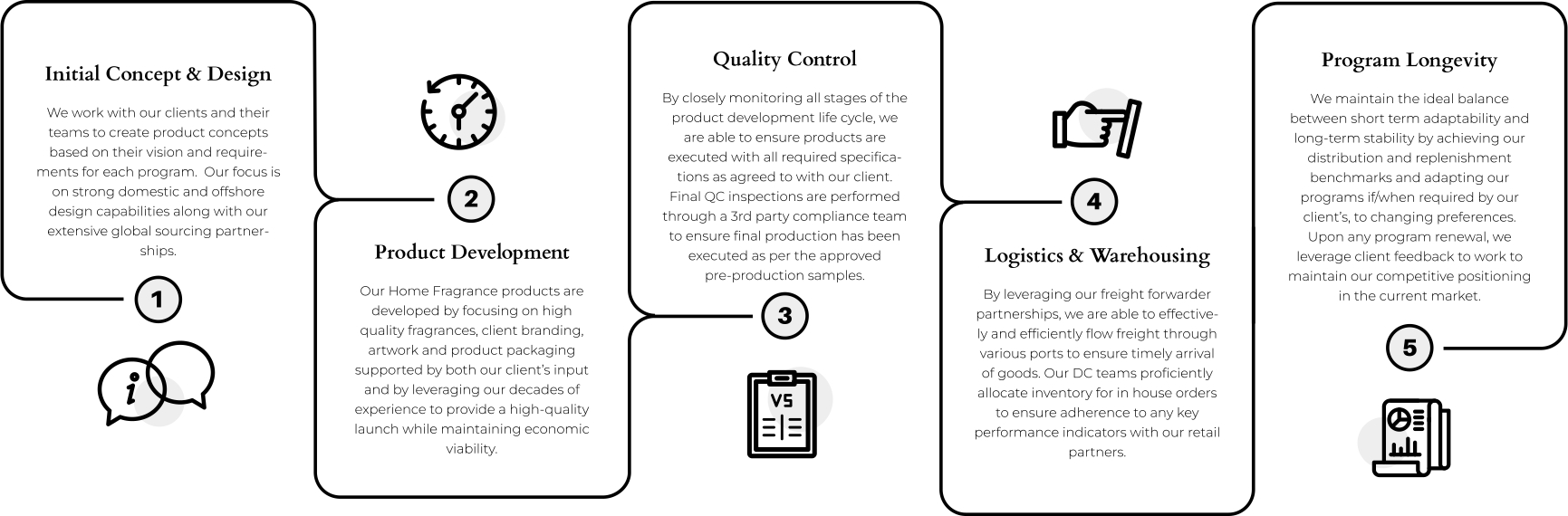
Sourcing Capabilities
Benefits of working with Fern:
Constant Company Growth
Since the inception of The Fern Group Inc. in 1962, the company has benefitted from continuous growth and improvement. The Fern Group Inc. has experienced an increase in national distribution and has secured new clientele in the Canadian retail market. This substantial growth has allowed us to expand and enhance our expertise to continue to accommodate the continually changing market trends.
Experienced Management Team
The Fern Group Inc. is proud to have a very experienced and diverse management team available to work with our clients to oversee all aspects of their program from initial design to production to delivery and to the retail launch.
With our many years of experience, The Fern Group Inc. is greatly equipped to meet our client’s needs, ensure effective communication throughout the life of a program and to develop and deliver exactly what our clients envision!
Well Established Brand Concept
With more than 60 years of experience in the Home Fragrance sector, The Fern Group Inc. has developed a cutting-edge logistics system with the capacity to quickly address the changing demands of the market. As a distributor with a variety of partners throughout our global sourcing chain, we can respond to changing customer demands and obtain a wide range of goods from domestic to direct import programs to meet any client’s needs.
Strong Relationships with Clients
The Fern Group Inc. is proud to have been able to foster deep-rooted relationships with our clients who in turn provide us with great potential for repeat business. These client relationships are formed and maintained by customizing our approach to meet each client’s requirements, ensuring our clients feel their needs are being understood and by sparing no efforts to exceed all customer service expectations.